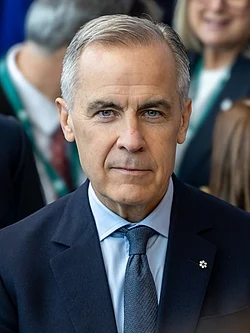
Mark Carney is a Canadian economist, former central banker, and politician who became Prime Minister of Canada in 2025. His professional background in international finance and monetary policy distinguishes him as one of the most experienced economic policymakers to enter Canadian political leadership.
Born in 1965 in Fort Smith, Northwest Territories, and raised in Edmonton, Alberta, Carney studied economics at Harvard University. He later attended the University of Oxford, where he completed postgraduate degrees in economics before pursuing a career in international finance.
Carney served as Governor of the Bank of Canada from 2008 to 2013, leading the institution during the global financial crisis and its aftermath. He subsequently became Governor of the Bank of England, becoming the first non-British citizen appointed to lead the British central bank.
After leaving the Bank of England, Carney remained involved in international economic affairs and became particularly prominent in discussions surrounding climate finance and sustainable investment. His combination of financial expertise and public-policy experience eventually led him into Canadian federal politics.
In 2025, Carney became leader of the Liberal Party and Prime Minister of Canada. His political agenda has emphasized economic growth, investment, affordability, trade diversification, and strengthening Canada’s economic resilience.
With experience spanning global finance, central banking, and government, Mark Carney has become a central figure in contemporary Canadian politics and economic policy.